Aircraft icing is a critical weather-related phenomenon that can affect flight safety through various forms. It can occur on different parts of the aircraft, each with its specific risks and management strategies. Here’s an in-depth look at the types of icing pilots may encounter and how they can impact flight operations.
Types of Aircraft Icing
Induction Icing
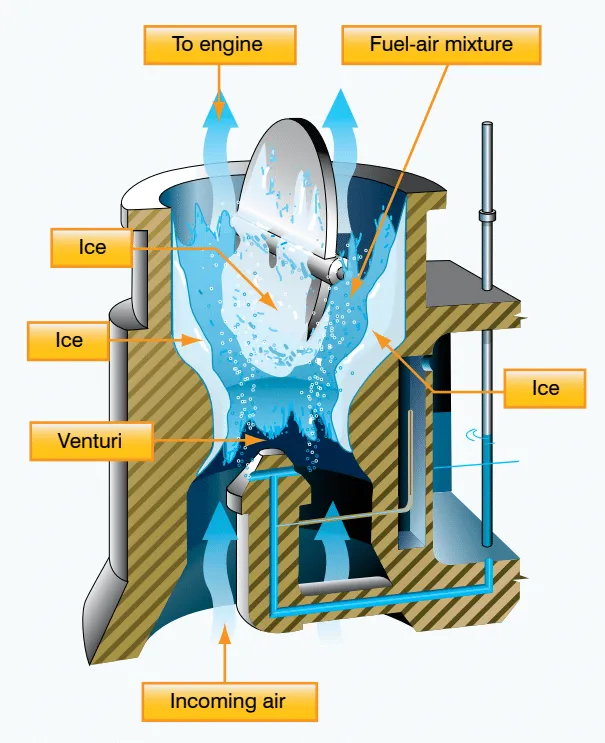
This type of icing affects the aircraft's engine systems, particularly those with carburetors. In carburetor icing, ice forms inside the carburetor due to the cooling effect of fuel vaporization combined with moist, cold air. This ice can block the flow of the air-fuel mixture, leading to engine failure or significant loss of power. Induction icing is more common in piston-engine aircraft but can be mitigated by using carburetor heat to warm incoming air, preventing the formation of ice.
Instrument Icing
Critical flight instruments like the pitot tube, which measures airspeed, can also accumulate ice. Ice formation in or on a pitot tube can lead to inaccurate airspeed readings or a total failure of the airspeed indicator, a crucial tool for safe flight. Instruments are generally equipped with heating elements to prevent or quickly eliminate any ice accumulation.
Airframe Icing
Icing on the aircraft's airframe is one of the most hazardous forms of icing. It can occur on any exposed structural surface, including wings, control surfaces, and the fuselage. Airframe icing is categorized into three types:
- Rime Ice: Formed by small supercooled liquid droplets freezing on contact with the aircraft. It usually appears opaque and rough. Rime ice typically forms in temperatures well below freezing and in conditions of low liquid water content, like in clouds or light drizzle.
- Clear Ice: This forms when larger supercooled water droplets spread over the surface before freezing. Clear ice is heavy, hard, and transparent, and it forms at temperatures close to freezing with high liquid water content environments.
- Mixed Ice: A combination of rime and clear ice, mixed ice forms under conditions where both types of droplets are present. It has characteristics of both and can be particularly challenging to remove.
Impact of Airframe Icing
The accumulation of ice on the airframe affects the aircraft in multiple detrimental ways:
- Lift: Ice alters the shape of the wing and disrupts smooth airflow, significantly reducing lift, which is critical for maintaining altitude.
- Drag: Ice buildup increases surface roughness, which in turn increases aerodynamic drag. This requires more engine power to maintain speed and can significantly affect fuel efficiency.
- Weight: Ice adds extra weight to the aircraft, which can impact performance, particularly on smaller aircraft.
- Frost: Even a thin layer of frost can disrupt airflow enough to reduce lift by up to 30%. It’s crucial to ensure that all surfaces are clear of frost and ice during pre-flight inspections.
Prevention and Management
To manage icing conditions effectively, pilots must be vigilant in monitoring weather conditions and aircraft performance. Use of deicing equipment such as heated leading edges, deicing boots, and fluid, along with heated pitot tubes for instruments, is critical. Avoiding known icing conditions and being prepared to exit such conditions quickly if encountered is also key to safe flight operations.
Pilots must always be trained to recognize the onset of icing conditions and understand the appropriate use of anti-icing and deicing systems. Regular training and adherence to safe operating procedures ensure that flights remain safe under adverse weather conditions.
For more detailed information on aircraft icing and management strategies, visit the CFI Notebook on Aircraft Icing.